Zara: From a Small Spanish Shop to a Global Fashion Powerhouse
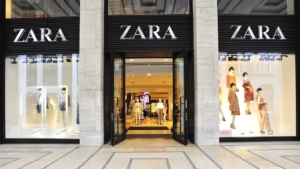
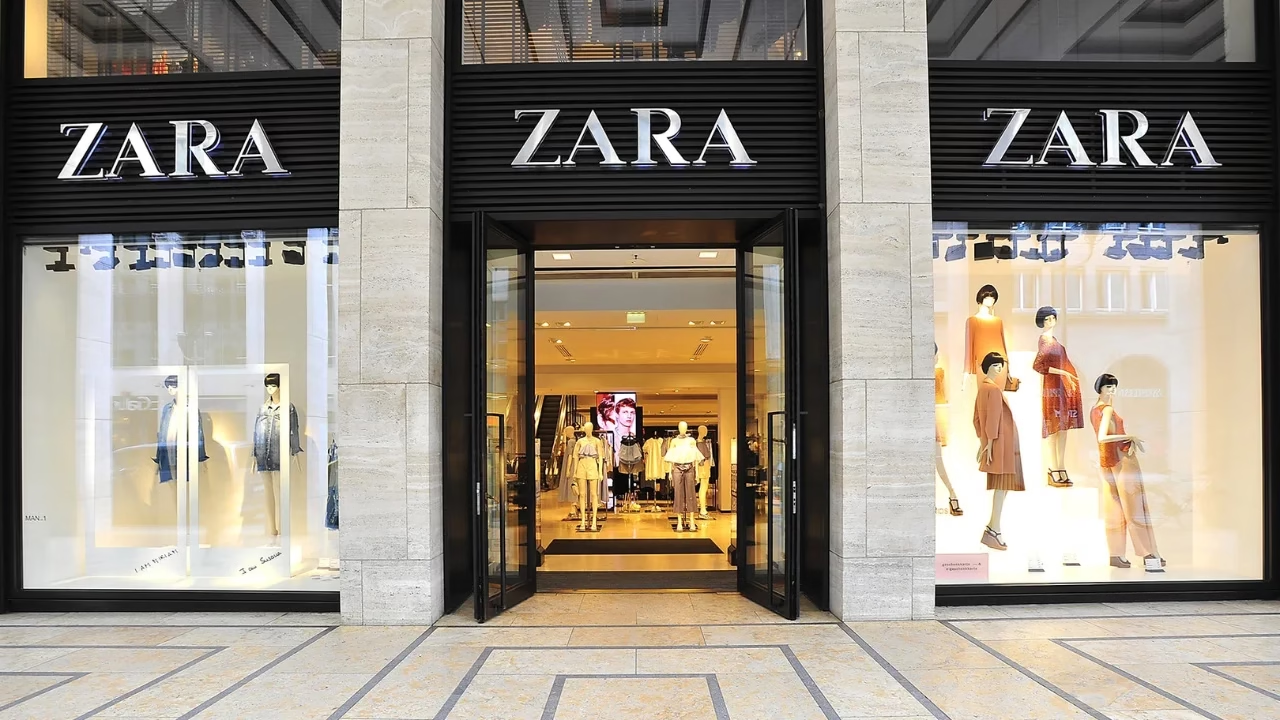
The story of Zara is one of the most fascinating business transformations of the last five decades. What began in 1974 as a modest clothing store in La Coruña, Spain, founded by Amancio Ortega, has evolved into a global empire and the flagship brand of Inditex, the world’s largest fashion retailer.
Humble Beginnings
Amancio Ortega, the son of a railway worker, started his career as a shirtmaker’s assistant. Observing customer habits closely, he realized that fashion consumers wanted stylish, affordable clothes without waiting months for seasonal collections. In 1974, he opened the first Zara store with his then-wife Rosalía Mera.
The concept was clear: replicate the looks of luxury brands quickly and sell them at lower prices. This agile, consumer-focused strategy laid the foundation of what would later be known as fast fashion.
The Fast Fashion Revolution
Unlike traditional fashion houses that released two collections per year, Zara created a model that allowed new items to appear in stores within two to three weeks of design. This speed-to-market was revolutionary, enabling Zara to constantly refresh collections and keep customers coming back frequently.
Ortega’s secret? A highly integrated supply chain, with design, production, and distribution largely managed in-house. Zara’s factories and logistics hubs in Spain and Portugal allowed for rapid adaptation to consumer trends.
Going Global
Zara’s international expansion began in the late 1980s, with its first stores in New York (1989), Paris (1990), and Mexico (1992). By the 2000s, Zara had become a truly global brand, opening flagships in major capitals and establishing itself as the face of affordable yet fashionable retail.
Today, Zara operates in more than 213 markets with over 5,700 stores, while its e-commerce presence covers almost the entire globe.
The Inditex Empire
Zara is the jewel of Inditex, the conglomerate Ortega founded, which also owns Massimo Dutti, Pull&Bear, Bershka, Stradivarius, Oysho, and Zara Home. Inditex reported revenues exceeding €40 billion in 2024, with Zara accounting for more than 70% of total sales.
This dominance has made Ortega one of the wealthiest individuals in the world, and Inditex a benchmark in retail innovation.
Challenges and Transformation
Zara’s meteoric rise has not come without criticism. As the fast fashion model faces scrutiny for its environmental and social impact, Zara has pledged a radical shift toward sustainability. By 2025, the brand aims to use only 100% sustainable cotton, linen, and polyester, while investing in recycling programs and eco-efficient stores.
At the same time, Zara is accelerating its digital transformation:
Online sales now account for over 25% of revenue.
AI-driven analytics help predict trends and optimize inventory.
The company experiments with “phygital” collections—pairing physical clothes with digital fashion assets.
A Cultural Icon
More than just a clothing brand, Zara has become a cultural phenomenon. Its ability to democratize fashion—making runway trends available at affordable prices—has reshaped the way millions of consumers think about style.
In 2025, Zara stands as the second most valuable fashion brand in the world, just behind Nike, proving that speed, adaptability, and consumer insight can red