Washington vs Beijing: Who Will Lead the Global AI Race?
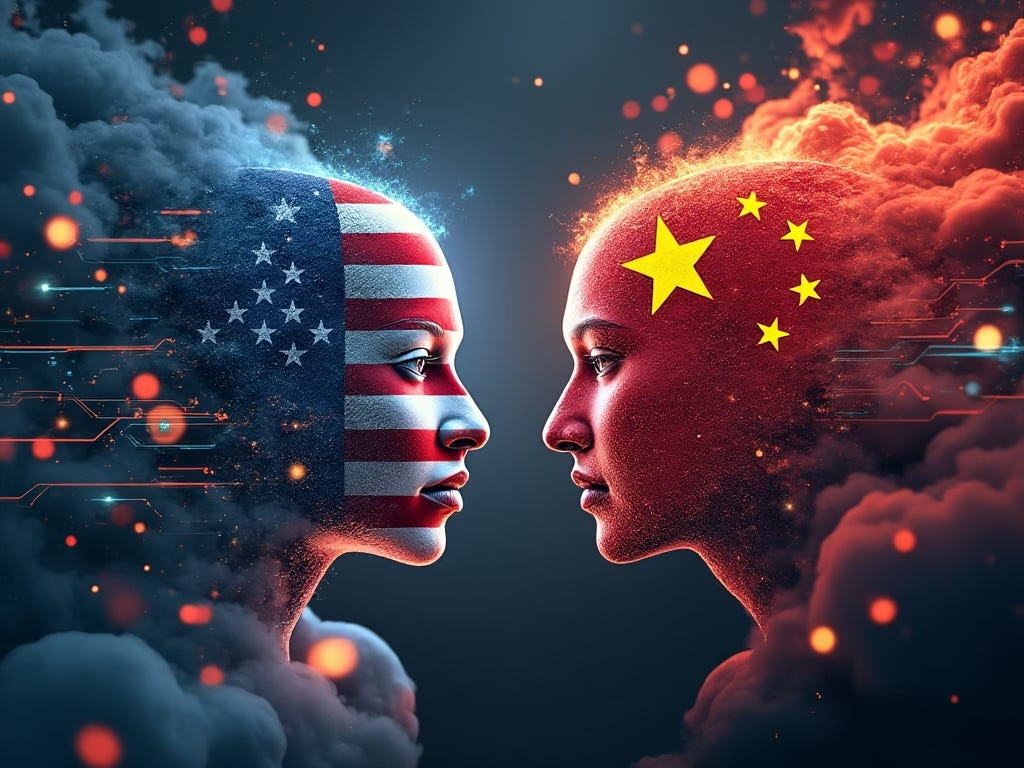
A high-stakes technological rivalry
The competition between the United States and China in artificial intelligence (AI) is intensifying in 2025, with each superpower pursuing a distinct strategy to dominate the sector. For Washington, the goal is to maintain technological leadership while managing ethical and strategic risks associated with AI. Beijing, on the other hand, aims to consolidate its global influence by promoting an AI model focused on multilateral cooperation and geopolitical leverage.
The United States: technological leadership and strict regulation
In July 2025, the U.S. administration unveiled its AI Action Plan, emphasizing domestic competitiveness and the ethical deployment of AI technologies. The plan is based on three pillars:
Boosting domestic innovation through substantial R&D investments.
Controlling exports of critical AI technologies to protect U.S. strategic advantages.
Strengthening infrastructure and regulatory frameworks to ensure ethical AI deployment.
While these measures reinforce American technological supremacy, experts caution that the U.S. focus on export control and regulation could limit international collaboration and give China strategic room to maneuver in the long term.
China: technological innovation and digital diplomacy
Beijing is pursuing a complementary approach, developing advanced yet cost-effective AI models while strengthening its normative and diplomatic influence in the global AI ecosystem. China’s Action Plan on Global Governance of AI emphasizes:
International cooperation and the establishment of global AI standards.
Strategic alliances, particularly with countries in the Global South.
Promotion of a national-multilateral AI model capable of challenging U.S. influence.
This strategy combines technological innovation with soft power, potentially giving China an edge in the global adoption and regulation of AI technologies.
Strategic comparison
Criterion United States China Primary objective Maintain tech supremacy, regulate AI use Develop competitive tech, expand global influence Strategy Targeted investments, strict regulation, export control International cooperation, global standards, strategic alliances Strength Cutting-edge innovation Rapid deployment and normative influence Risks International isolation, limited collaborative innovation Dependence on diplomacy, external economic pressures Geopolitical stakes and outlook
The AI race is not merely technological—it is reshaping global power dynamics. The ability of each nation to influence regulations, standards, and global AI adoption will define the digital architecture of the future.
The United States retains an advantage in cutting-edge innovation, while China leverages a holistic model combining technology, standards, and international influence. In the coming months, adoption speed, international partnerships, and domestic regulation will determine which power emerges as the global leader in AI.