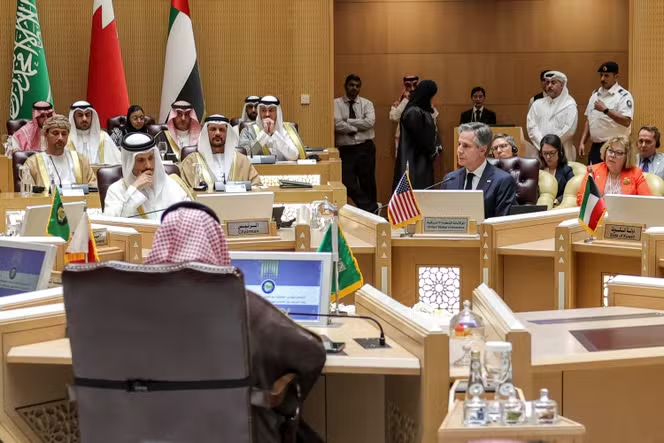
US and Qatar Push New Ceasefire Proposal for Gaza Amid Mounting Regional Tensions
Washington, Doha, and Cairo step up mediation
Diplomatic efforts to halt the Gaza war gained new momentum today as Qatar and the United States, in close coordination with Egypt, unveiled a revised ceasefire proposal aimed at breaking months of deadlock. The plan, shared with both Israeli and Palestinian representatives, seeks to establish a 60-day truce while laying the groundwork for broader political negotiations.
According to officials briefed on the discussions, the proposal centers on three pillars:
A sustained humanitarian pause to allow large-scale delivery of aid and medical supplies into Gaza.
A phased exchange involving the release of Israeli hostages and Palestinian prisoners.
Partial Israeli troop withdrawals from specific areas of the enclave, designed to reduce civilian casualties and ease humanitarian access.
A delicate balance of interests
The diplomatic push underscores the increasingly complex balancing act facing mediators:
Israel’s leadership remains split between hardliners demanding continued military operations and those who see tactical value in a truce.
Hamas, battered militarily but still entrenched, is pressing for stronger guarantees on lifting the blockade and ensuring civilian protection.
The United States is walking a tightrope—backing Israel militarily while seeking to contain regional fallout and respond to mounting international pressure.
Qatar and Egypt, with established communication channels to Hamas, are positioned as indispensable intermediaries.
A narrow window for de-escalation
For Washington, the timing is crucial. With rising domestic criticism of its handling of the war and growing concern about potential regional spillover—from Lebanon to the Red Sea—the Biden administration views the Doha-Cairo track as perhaps the last realistic chance to prevent a full-scale escalation.
Regional analysts caution, however, that without a political horizon—including clarity on post-war governance of Gaza and reconstruction commitments—any ceasefire risks becoming little more than a temporary lull before renewed violence.
What comes next
Negotiations in Cairo are expected to continue in the coming days, with mediators pressing both sides for at least preliminary agreement on the humanitarian truce. Diplomats describe the atmosphere as “tense but serious,” noting that all parties are aware of the growing costs of failure.
For now, the new US-Qatari proposal represents a rare glimmer of diplomatic opportunity in a conflict that has claimed tens of thousands of lives and destabilized the wider region. Whether it succeeds will depend on whether political leaders in Jerusalem, Gaza, and beyond are willing to prioritize compromise over confrontation.