U.S. Government to Become Intel’s Largest Shareholder in Bold CHIPS-Act Conversion
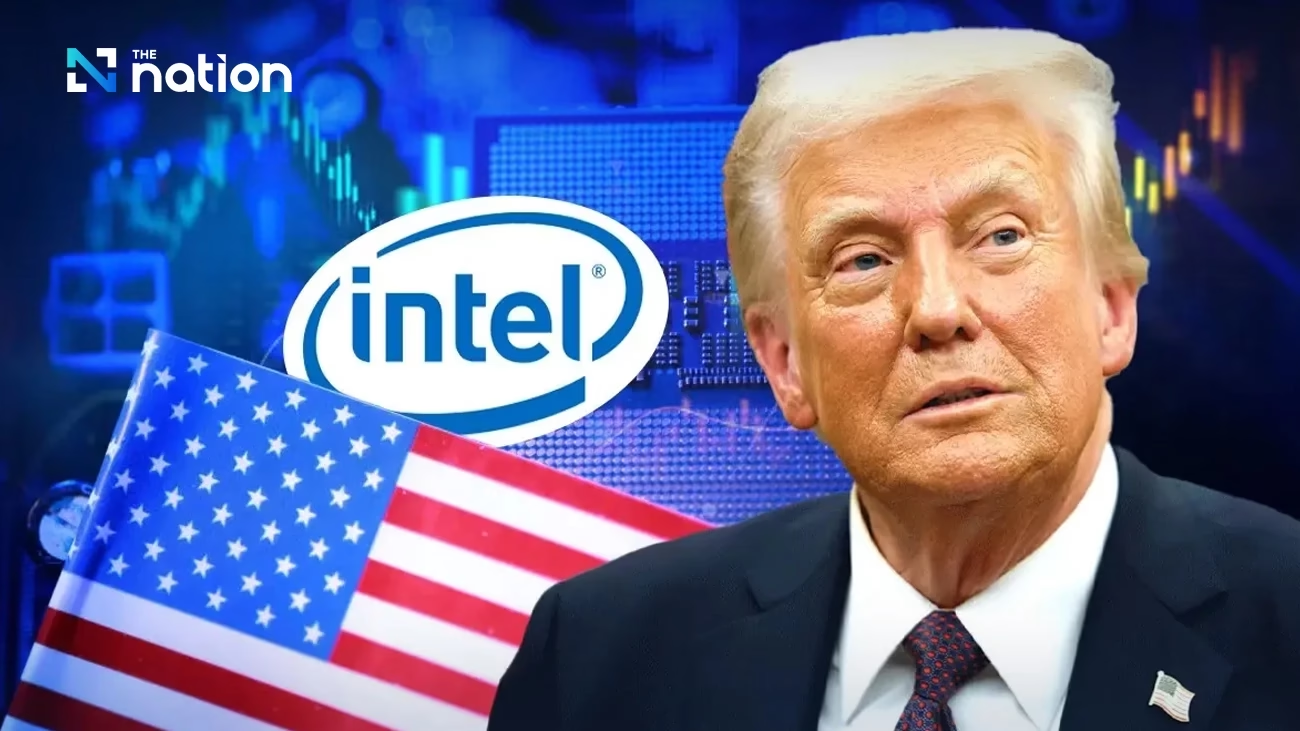
Washington, August 30, 2025 – In an unprecedented pivot from traditional free-market policy, the U.S. government has taken a 9.9% equity stake in Intel, converting $11.1 billion in previous CHIPS Act grants into stock and becoming the semiconductor giant’s largest shareholder.Reuters+1Financial Times
A Non-Voting Stake with Far-Reaching Implications
The stake is structured as non-voting equity, with no representation on Intel’s board, though the Commerce Department can still participate in certain corporate votes.ReutersInvesting.commintDatacenterDynamics While the government asserts this limits interference, analysts warn the move fundamentally dilutes existing shareholders and blurs the line between public and private sector governance.ReutersInvesting.com
Strategic Messaging Amid Industrial Policy Debate
Officials, including Commerce Secretary Howard Lutnick and Treasury Secretary Scott Bessent, defend the move as ensuring taxpayers receive value—a shift from Biden-era “free” grants to compensated equity.mintDatacenterDynamicsFinancial Times They emphasize that this is no nationalization effort, referring to it as an innovative approach to support U.S. chip production.DatacenterDynamicsctech
Investor Alarm Over State Capitalism Precedent
Investors and governance experts have sharply criticized the decision. Concerns focus on the lack of strategic foresight and the precedent it sets for federal stakes in private industry. James McRitchie, shareholder activist, warned: “It sets a bad precedent if the president can just take 10% of a company by threatening the CEO.”Investing.com Others foresee heightened regulatory risk, conflicts of interest, and potential interference with global business operations.ReutersInvesting.com
Intel’s Position: Liquidity, but Strategic Bump Remains Uncertain
Though the injection of liquidity arrives amid financial struggles for Intel, the company cautioned that the deal might backfire—drawing international ire, jeopardizing market confidence, and exposing the firm to litigation.The Washington Post Fitch Ratings notably said the arrangement offers cash but fails to resolve underlying demand and competitive weaknesses.Investing.com
What This Means for the U.S. Tech Industry & Policy
Industry Impact: The move signals a bold new chapter in U.S. industrial policy, harking to models seen in Europe and Asia—and raising fears of creeping state capitalism.ReutersFinancial TimesNew York Magazine
Policy Debate: Conservative critics denounce it as ideological betrayal; others view it as pragmatic adaptation in an era of supply-chain fragility.The GuardianAP NewsNew York Magazine
Market Stability: While Intel’s stock remains stable, long-term investor confidence will hinge on the company’s ability to execute its turnaround plan independent of political influence.Wall Street JournalReuters
In Summary
By becoming Intel’s largest shareholder, the U.S. government has pierced the curtain between the public and private sectors in a transformative—and controversial—gesture. While purportedly designed to protect national security and taxpayer interests, the move ignites urgent questions about corporate governance, industrial strategy, and the future role of government in the tech economy.