Algeria’s Economy and Its Arms Race: Between Military Illusion and a Development Crisis
Amid increasing economic challenges, Algeria continues to allocate massive resources to its defense sector, raising questions about the effectiveness of this strategy given the country’s ongoing financial and social crises.
1. The Algerian Economy: Fragility Beneath the Surface
The Algerian economy relies almost entirely on oil and gas revenues, which account for over 90% of exports and 60% of the state budget. This overdependence makes the country highly vulnerable to fluctuations in global energy prices.
In recent years, with falling oil prices, Algeria has witnessed a growing budget deficit, rising inflation, and declining purchasing power among citizens. Economic growth rates have remained modest, insufficient to bridge gaps in employment or to address deteriorating infrastructure.
2. The Arms Race: Draining Resources
Despite economic pressures, Algeria has continued to devote enormous resources to its defense sector. Over the past decade, it has become one of Africa’s largest arms importers, investing tens of billions of dollars in modern military equipment.
This intensive military spending raises concerns among economists and political analysts alike, who argue that every dollar spent on arms is a dollar taken away from vital civilian investments in health, education, and infrastructure, further exacerbating the country’s economic fragility.
3. Expected Consequences: Economy on the Brink
Economists warn that continuing excessive military spending alongside a struggling economy could lead to catastrophic outcomes:
Deterioration of foreign exchange reserves, limiting the ability to import essential goods.
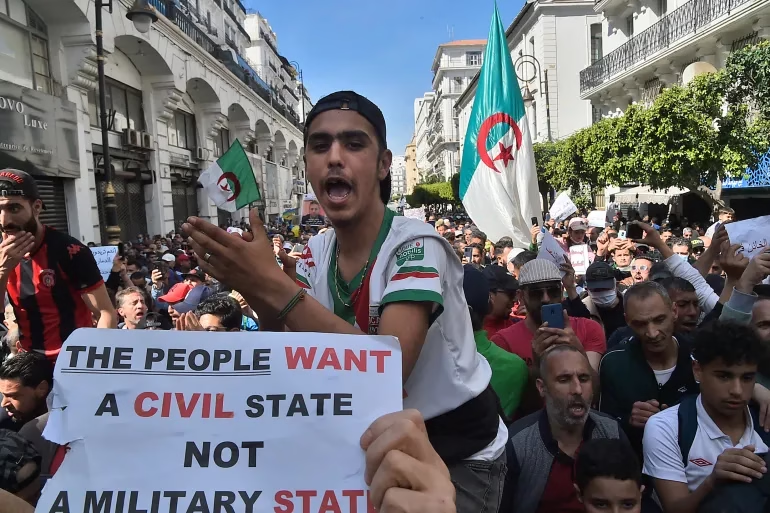
Rising unemployment and poverty, particularly among youth, increasing social and political pressures.
Declining foreign investment, due to the absence of clear economic policies and incentivizing laws.
In short, prioritizing military power over civilian economic needs could lead to a long-term financial deadlock threatening national stability.
4. Path to Reform
Algeria has no choice but to reassess its economic priorities:
Diversify the economy away from oil and gas by supporting local industry, agriculture, and technology.
Restructure the defense budget to balance national security with human development and infrastructure.
Encourage private and foreign investment through legislative reforms and greater financial transparency.
Algeria faces a genuine dilemma: an intensive arms buildup alongside a fragile economy. Continuing excessive military expenditure without fundamental economic reforms could push the country toward a financial and social abyss. The future demands a balance between security and development, otherwise military strength alone will not save a collapsing economy.