Charlie Kirk’s Death: Political Violence as a Symptom of a Fractured America
The assassination of Charlie Kirk on September 10, 2025, at Utah Valley University marks a deeply unsettling moment in American political life. Far from an isolated incident, his death raises urgent questions about rhetoric, responsibility, and the resilience of American democracy.
What We Know
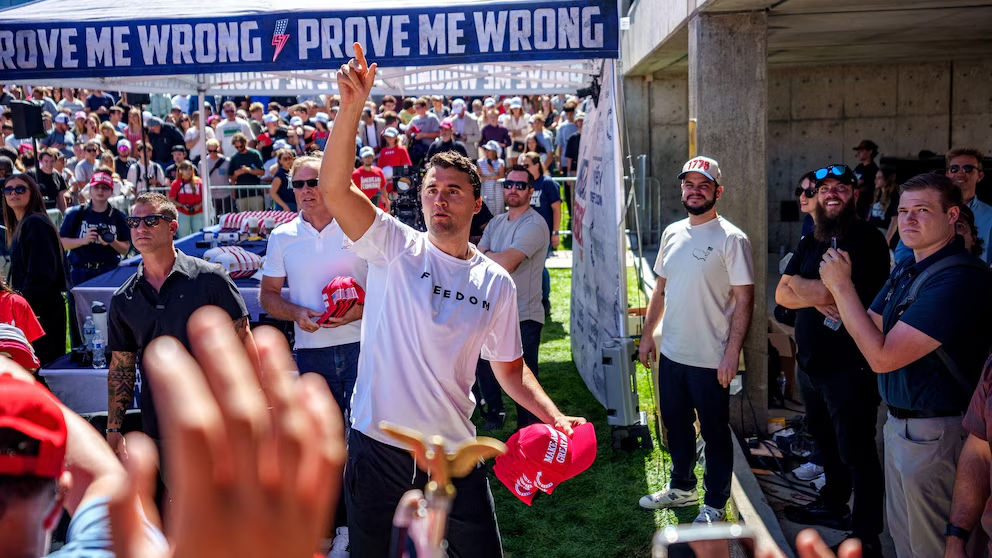
Charlie Kirk, 31, conservative activist and founder of Turning Point USA, was a close ally of Donald Trump. He was speaking during his “American Comeback Tour,” engaging students in a debate-style Q&A format, when a single bullet struck his neck. Authorities believe the shot came from a nearby rooftop. He died shortly after in hospital. The FBI and local police continue their investigation, but no suspect has been charged as of now.
The Political Shockwave
Kirk’s killing resonates on two levels:
Symbolic: He embodied a new generation of conservative activists, blending social media savvy, sharp rhetoric, and campus outreach to advance hot-button positions on issues such as abortion, gender, and immigration.
Political: Donald Trump immediately condemned the shooting, ordered flags at half-mast, and accused the “radical left” of fueling a toxic climate. His statement underscored the intensity of partisan blame but offered no direct evidence linking the act to left-wing extremism.
The Role of Rhetoric
Trump and his allies argue that relentless demonization of figures like Kirk creates an atmosphere where violence becomes thinkable. While the connection between rhetoric and this specific act remains unproven, the episode highlights a dangerous truth: America’s political discourse is increasingly defined by vilification rather than debate.
Three questions now loom large:
How much do hate speech and conspiracy theories feed political violence?
At what point does extreme rhetoric, even if not intended as a call to arms, legitimize violence?
What institutional and cultural steps are needed to slow the escalation—whether through stronger security, accountability for political speech, or renewed civic education?
A Threat to Democracy
When political violence becomes normalized, democracy loses its foundation: persuasion through words, not weapons. The danger is twofold:
Public figures like Kirk become direct targets.
Ordinary citizens absorb the notion that settling political disagreements by force is acceptable.
Possible Responses
Transparency: Authorities must not only identify the shooter but also clarify the motive, preventing speculation from fueling further division.
Cross-party dialogue: Moderate voices on both sides must resist the drift into extremes and call for restraint.
Stronger event security: Organizers and institutions need improved risk assessments and protection for public figures.
Online accountability: Platforms and regulators should balance free speech with firm measures against calls for violence.